Both Doug Judell and I enjoy relaxing and birding
at Doi Chiang Dao,
so even though the time of year wasn't really right we decided
that with time on our hands it would be a good place to see
some early migrants. Having hired a four-wheel drive vehicle
in Chiang Mai we drove to Malee's lodge in the village of
Chiang Dao where we were welcomed. There was time for a short
walk to the nearby forest temple where we saw a number of
the usual suspects including Streaked Spiderhunter, Brown-cheeked
Fulvetta, Orange-bellied Leafbird and an early Blue Rock Thrush.
Transport
We hired a Suzuki Caribbean, a small four-wheel drive vehicle
which can be found very cheaply for hire in Chiang Mai. While
being equipped to get up the very muddy road to Den Ya Kat,
this vehicle is very underpowered and driving any distance
takes a long time due to its low maximum speed. It was also
fairly unconfortable and its road handling was poor.
The evening consisted of chatting with some other birders
over dinner and a couple of beers. Doug was happy to discover
that the birders' logbook he had started years ago at Malees
was still running, and it is an excellent source of information
although there were not too many entries for this seldom-visited
time of year.
Neither of us were that keen to wake up extremely early so
we waited for Malee to serve us breakfast before heading to
the forest temple again. Lots of birds were around, with a
decent helping of drongos, minivets, bulbuls and flycatchers,
but nothing really special. For me the best bird was a Purple-naped
Sunbird feeding on nectar at the base of the temple stupa;
this is a widespread bird in Thailand but until now had proved
to be a "bogey" bird for me. Lurking around the
monks' quarters turned up a Black-hooded Oriole, but there
was no sign of Streaked Wren Babbler which we have both found
very common on previous visits and which, incidently, many
have mistaken for Limestone Wren Babbler; be careful!
A little disappointed in the birding, light rain completely
dampened our spirits and we strolled back to Malee's to read
and wait for better weather, but not before a very difficult
little bird crossed our path: skulking around in some low
bushes was a Seicercus warbler which after much deliberation
we decided was Plain-tailed Warbler from its call. Whilst
lounging around the idea to drive up to Den Ya Kat near the
top of Doi Chiang Dao was put forward by Doug. Having never
been there before I was happy to agree so it was off to the
National Park HQ, a short distance up the road, to obtain
a permit. This is a simple formality and once completed it
was back to our reading.
In the afternoon the weather improved sufficiently for us
to consider a drive to a higher altitude in hope of finding
some "better" birds. We drove along the road which
goes behind Malee's, through a checkpoint and then up the
mountain; taking this route can increase your altitude significantly
and the species that you will see. The road is pretty narrow
and finding suitable places to stop isn't particularly easy;
our first stop was in similar habitat to further down the
mountain with bamboo and broad-leaved trees, but the birds
appeared more active here and we very quickly saw White-browed
Piculet which was located by its surprisingly loud banging
on bamboo. This amusing little bird proved to be at the head
of a bird wave, with Long-tailed Broadbill, Blue-bearded Bee-eater
and Golden-fronted Leafbird some of the most colourful highlights.
Continuing up the mountain, the forest became more open and
dominated by pine trees; this more open nature allows the
sun to penetrate and it is wise to find shadows to stand in
whilst observing birds. Species such as Grey Treepie, Japanese
Tit and Eurasian Jay were some of the most obvious birds,
with the subspecies of Jay found here differing greatly from
the one I'm used to back in the UK but equally handsome in
its own way. Whilst jumping from shade patch to shade patch
and taking turns to move the car along the road a bird hawking
overhead drew our attention. At first we only had brief views
as it revealed itself from behind a ridge but eventually we
both obtained great views of an Oriental Hobby; a first for
Doug and only the third time I'd ever seen it. This species
is unmistakeably a Hobby in terms of its behaviour and shape,
differing in its rufous coloured underparts, making it perhaps
even more special than the European version. We were tiring
in the heat by this point and a shower and some food were
beckoning, but I managed to persuade Doug to make one more
stop, something I am very pleased about as we saw one of the
birds of the trip (at least for me it was): Hodgson's Hawk
Cuckoo. I can't remember what it was that made us peer down
a hill through the pine trees, but when we did a juvenile
of this species showed itself well for a few minutes before
departing into the forest. Having decided that we had had
as much excitement as our constitutions could take for one
day we descended to Malee's. At the base of the mountain we
stopped at the checkpoint to rummage around in a gulley where
Tesias had been seen by others; all we saw were a couple of
semi-rabid dogs eyeing us up with foaming mouths and suddenly
Tesias didn't seem very interesting at all.
As ever, the relaxing atmosphere at Malee's, after a shower,
proved a nice way to unwind and share stories with other birders;
stories in which the birds we'd seen became larger, more colourful
and more endangered in direct proportion to the amount of
beer we'd consumed.
We made an early start, but finding the access road which
ascends the mountain proved a little tricky in the dark. Once
light Doug managed to find it; in fact it seems that all the
roads opposite a small teak plantation on the main highway
lead to the track. As we went through the farmland at the
foot of the mountain an Eastern Marsh Harrier flew over -
a welcome surprise. The quality of the road rapidly deteriorated
after only about half a kilometre of our ascent, being very
steep and slippery. In actuality it quickly became quite concern
whether we would be able to continue or not, but as there
were no places to turn around we carried on. After around
20 minutes a suitable place to stop presented itself where
we saw only a few common species and decided to go for the
top. we had been told to expect about 2 hours to reach Den
Ya Kat, but in these wet conditions it seemed that it could
be longer. Much to our dismay the road got worse! Deep rutted
mud on the edge of precipitous drops made for an increasingly
worrying journey; Doug's eyes were bulging with concentration
and my knuckles were turning white as we slipped around on
this so-called road. This seemed like a journey that would
never end at times, or at least if it did it wouldn't be a
happy end, but Doug aimed the car accurately all the way to
Den Ya Kat.
Bird
Watching Trips to Northern Thailand:
Birding
northern Thailand is always delightful with a large
number of colourful species easily
seen in a number of beautiful locations. Some of the
specialities need expert knowledge to find but the supporting
cast is always great while searching.
Contact me to arrange a birding trip and/or to discuss
the best bird watching options for you: nickupton@thaibirding.com
At this altitude there was a little mist at this time (around
9.30 am) which was pleasantly cool, and we headed straight
for the trail that heads towards the mountain's summit;
this starts to the left of the buildings at Den Ya Kat as
one looks at them. Unfortunately there were no burnt areas
of grass which would have made seeing Hume's Pheasant more
likely, but as we walked along the ridge through pine forest
that has proved so productive for other we began to see
birds. One of the first to be seen was a Common Hoopoe,
a bird I never tire of seeing, followed by Eurasian Jay,
Lesser Racket-tailed Drongo and Grey Treepie. These birds
felt like the "warm up" as what we were hoping
to find was Giant Nuthatch, which has been consistently
seen here; so we stood and waited, every movement filled
with expectation that it was our target. First a Japanese
Tit showed itself; false alarm; next a hoard of Olive-backed
Pipits, then a nuthatch! But this turned out to be a Chestnut-vented
Nuthatch, and then another nuthatch, this time Velvet-fronted
Nuthatch! Then finally Giant Nuthatch. Incredibly this meant
that we had three species of nuthatch on one branch and
indeed the size of the giant was obvious against these smaller
species. We watched these birds for as long as possible
and we had two giants together and possibly three. When
eventually they disappeared we moved on with Doug confirming
that this was the exact spot he had seen the species some
years before. A little further along is a lookout, with
agreat view over the mountain and to our right the summit
was clear; a beautiful sight and a long walk! At this point
Himalayan Swiftlets were swooping around and a group of
Small Minivets were startled into flight at an altitude
far higher than expected.
We continued for a way up the summit trail without ever
expecting to reach the top and indeed we turned around as
the weather began to heat up. Interesting species we saw
near our highest point were Stripe-breasted Woodpecker,
Grey-backed Shrike and the abundant Flavescent Bulbul. It
still took a few hours to walk back to the car and we then
spent some time birding along the road which at this height
winds fairly gently along the ridges; by this method we
added Grey-capped Pygmy Woodpecker, Large Cuckooshrike,
Black Bulbul and Scarlet Minivet to our list. It occured
to me that it would seem just as likely to see good birds
along the road up here as it would to walk the summit trail.
As time was pressing we decided that it was time to descend
which was a pity; to get the best out of this location it
would be a good idea to spend the night at the small campground
at Den Ya Kat so that the whole day can be enjoyed at this
fantastic location.
The journey down was as terrifying as the upward
one, perhaps even worse as the expectation of seeing some
good birds wasn't with us anymore. At times it seemed that
Doug struggled to control the vehicle and to me he did excellently
to stop us from sliding down into one of the many steep gulleys.
A four-wheel drive vehicle is an absolute neccessity to drive
this track at this time of year, and it would be useful if
the driver was experienced in very poor conditions. PLEASE
do not attempt to drive this road after prolonged periods
of rain in anything other than a four-wheel drive vehicle.
Back at Malee's we gradually came down from our adrenaline
induced high and enjoyed another relaxing evening when we
discovered that some other birders attempted to drive to Den
Ya Kat that same day and turned around due to the dreadful
conditions. The next day we headed towards Doi
Ang Kang for more birds.
N.B. Since this trip we have been back
to DYK in February 2004 and the track up the mountain was
in far better condition, nothing to worry about at all. A
four-wheel drive vehicle would still be advisable due to steep
gradients and it being a dirt road, but at this time of year
it did not resemble a mud slide.
If you are interested in arranging a bird
watching tour you can see some suggested itineraries here
- Birdwatching Trips
- and you can contact me at the above email address to discuss
the best options.
Central
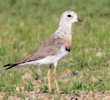
Mongolia , 20th May-3rd June 2021 - Black-billed
Capercaillie, Oriental Plover, Henderson's Ground Jay, Azure
Tit, Pallas's Sandgrouse: Contact
me for details
Thailand
Raptor Migration, 26th Oct-5th Nov 2021 -
Black Baza, Grey-faced Buzzard, Pied Harrier, Lesser Fish
Eagle, Spoon-billed Sandpiper: Contact
me for details






 Central
Mongolia , 20th May-3rd June 2021 - Black-billed
Capercaillie, Oriental Plover, Henderson's Ground Jay, Azure
Tit, Pallas's Sandgrouse:
Central
Mongolia , 20th May-3rd June 2021 - Black-billed
Capercaillie, Oriental Plover, Henderson's Ground Jay, Azure
Tit, Pallas's Sandgrouse: 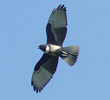 Thailand
Raptor Migration, 26th Oct-5th Nov 2021 -
Black Baza, Grey-faced Buzzard, Pied Harrier, Lesser Fish
Eagle, Spoon-billed Sandpiper:
Thailand
Raptor Migration, 26th Oct-5th Nov 2021 -
Black Baza, Grey-faced Buzzard, Pied Harrier, Lesser Fish
Eagle, Spoon-billed Sandpiper: 
 South
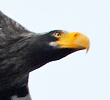
Korea, 5-17th January 2022 - Steller's Sea
Eagle, Relict Gull, Red-crowned Crane, White-naped Crane,
Baikal Teal, Solitary Snipe, Asian Rosy Finch:
South
Korea, 5-17th January 2022 - Steller's Sea
Eagle, Relict Gull, Red-crowned Crane, White-naped Crane,
Baikal Teal, Solitary Snipe, Asian Rosy Finch: