Introduction Although the wet season is not noted as the prime
birding time in Thailand there are a number of species which
are easier to see at this time of year, and for those whose
holidays fall in this season there is still plenty of good
birding to be had as this trip proved.
Robert King is one of those whose holiday dictates when he
can travel and he came to Thailand with a realistic idea of
what he could see at this time of year; both Robert and myself
were very pleasantly surprised with how many species we were
able to find.
One of the benefits of travelling in Thailand at this time
of year is that there are few other people around and there
is no need to book hotels in advance, making for a lot of
flexibility. With the lack of tourists this is a good time
of year to get a good deal on car hire and accommodation too.
Car Hire
Thai Rent a car was used for both the Petchaburi and Chiang
Mai legs of the trip with a 2 door Toyota Vigo being upgraded
to the 4 door version at both locations. In Bangkok I collected
the car from Thai Rent a car's office on Petchaburi Road at
10pm (after hours pickup and dropoff is allowed from the office,
with a free delivery service in office hours) on 16th July
and dropped it off again at 10pm on the 19th. In Chiang Mai
the vehicle was delivered and collected from our hotel at
8pm in the evening.
Other Travel
Robert and I travelled from Bangkok's Morchit bus station
to Chiang Mai in a "VIP" bus. In reality the VIP
means that there is more leg room, the drivers are more professional
and take turns rather than keeping awake with drugs and coffee
and that the journey is far less arduous all round.
The fare at the time was 600 baht per person. The trip takes
9 hours and is actually fairly easy going and a cheap alternative
to flying. Robert flew back to Bangkok; the one way trip cost
around 2500 baht including taxes.
Accommodation
At Kaeng Krachan we stayed at the very pleasant and reasonably-priced
Baan Maka Nature Resort.
In Chiang Mai we stayed in the Traveller's
Inn Hotel on Loi Kroh Road. This is reasonably priced
at 600 baht per night for an air-conditioned room, although
the rooms are a little tired but clean.
At Doi Inthanon we stayed at the pleasant Inthanonon
Highland Resort.
At Doi Ang Kang we stayed at the pleasant bright blue hotel
which is on the back street of Ban Khoom: the rooms are clean
and have hot showers.
Notes on Finding Birds
Although birds were in a much lower density than in the dry
season, we still managed to see a high number of species.
In fact many of the resident birds are much easier to find
at this time of year as they are still breeding, although
they are more active in June.
Many birders take an afternoon break in the dry season and
while this time of day is less productive than the morning
or late afternoon, staying out all day will result in more
birds. This was particularly true on this trip and all our
best birding in the north was between 10am and 2pm after the
sun had burned off the morning rain/mist and before the afternoon
rain began. In fact, any break in the rain usually resulted
in flourish of bird activity and if we had taken afternoon
breaks we would have missed most of the best species.
As always, patience and perseverance is rewarded and by staying
out when others would have stopped for an early lunch or dinner
we came across good birds such as Blue Pitta and White-crowned
Forktail. Remaining patient through the periods when nothing
is seen is vital and will be rewarded with key birds. In Thailand's
forests it is not unusual to go 1 hour or more without identifying
a single bird and those who accept this as part of birding
in Thailand can stay patient and find more birds.
Knowing the calls of some birds is vital, without knowledge
of the calls we would have missed most of the broadbills,
both pittas, many of the woodpeckers, laughingthrushes and
babblers along with many other species.
Tung Bang Jak: Streaked Weaver, Asian Golden
Weaver, Pheasant-tailed Jacana, Black Bittern, Watercock,
Asian Openbill, Painted Stork, Lesser Whistling Duck. Laem Pak Bia: Spot-billed Pelican, Malaysian
Plover, Painted Stork, Collared Kingfisher. Kaeng Krachan: Great Hornbill, Tickell's
Brown Hornbill, Blue Pitta, Blue-winged Pitta, Great Slaty
Woodpecker, Banded Kingfisher, Black-backed Kingfisher, Banded
Broadbill, Black-and-red Broadbill, Silver-breasted Broadbill,
Green Magpie, Sultan Tit, Rufous-bellied Eagle. Doi Inthanon: Silver-eared Mesia, Black-throated
Parrotbill, Chestnut-crowned Laughingthrush, Green-tailed
Sunbird, Yellow-cheeked Tit, Slaty-backed Forktail, Spotted
Owlet. Huay Tueng Tao: Asian Barred Owlet, Rufous
Treepie, Chestnut-capped Babbler, Bright-headed Cisticola,
Chestnut-tailed Starling. Doi Ang Kang: Giant Nuthatch, White-browed
Laughingthrush, White-crowned Forktail, Spot-throated Babbler,
Spot-breasted Parrotbill, Crested Finchbill.
Daily log
17th July : After collecting Robert from
the Majestic
Grande Hotel in Sukhumvit Soi 2 we arrived at
Tung Bang Jak a little before 7am. Stopping just a short way
from the main road we found a large number of wetland and
open-country species; Asian Golden Weaver, Streaked Weaver,
Yellow Bittern, Cinnamon Bitttern, Asian Openbill, Baya Weaver,
Javan Pond Heron - all species that are regular at this spot
but impressive none the less. One of the benefits of birding
in the wet season is a few species that are not present in
the dry and we had a nice view of a male Watercock and a couple
of flyover Black Bitterns.
A few hours at this spot can be quite overwhelming for first
time visitors to Thailand as the number of species that can
be seen is high. After adding Indochinese Bushlark, Ashy Woodswallow,
Purple Heron and Chestnut Munia to the list we made a stop
for Pheasant-tailed Jacana and Bronze-winged Jacana before
lunch at a small restaurant.
After lunch a scout around the area produced an Osprey feeding
in a tree and a small number of returning shorebirds; Wood
Sandpiper, Marsh Sandpiper, Common Greenshank and Long-toed
Stint. Nearby in a flock of Asian Palm Swifts we picked out
a few Germain's Swiftlets which are easily separated by their
more rounded wings and pale rump patch.
Heading towards Laem
Pak Bia we stopped at the King's Project area where a
single Spot-billed Pelican was circling before landing on
a pool and 7 Painted Storks were strutting around. This area
is always good for close-up views of a number of waterbirds
and photography. Birds that were presenting themselves for
viewing on this occasion included an unseasonal Grey Heron,
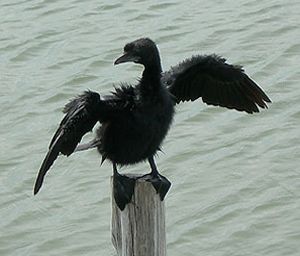
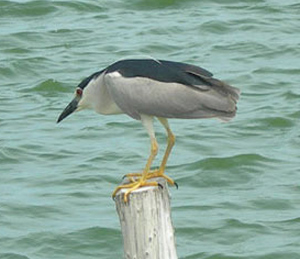
Little Cormorant, Indian Cormorant, Black-crowned Night Heron,Javan
Pond Heron, Great Egret, Little Egret, Red-wattled Lapwing
and Black-winged Stilt..
At this
time of year there are a few migrant shorebirds around so
we decided to take a walk along the boardwalk that runs out
the back of the King's Project through the mangroves which
leads to some platforms that give a view across the mudflats.
On the way to the mudflats we found Golden-bellied Gerygone,
Collared Kingfisher, Common Iora and Pied Fantail. Overlooking
the mudflats we found some waders; a small number of Common
Greenshank, about 40 Lesser Sand Plovers, around 12 Greater
Sand Plovers, 6-7 Kentish Plovers, 3 Malaysian Plovers and
20-30 Red-necked Stints. With rain threatening we headed back
to the car finding a few Green Bee-eaters and a Paddyfield
Pipit on coastal flats before taking the 1 hour drive to Ban
Maka.
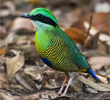
18th July : We had breakfast at 5am and a
fantastic first bird of the day was a beautiful Blue-winged
Pitta! I heard this bird calling from behind one of the bungalows
at Ban Maka and eventually it revealed itself on the lawn
of the guesthouse, giving us superb views of it as it foraged
for its own breakfast.
After this excitement we got into Kaeng
Krachan national park for 6.20am. Our aim was to head
straight to Ban Krang but we made a stop at a pool beside
the entrance road where we had great views of a pair of Black-and-red
Broadbills, a pair of flyover Great Hornbills, a Black-thighed
Falconet and a Greater Flameback. This prevented us from getting
to Ban Krang as early as would have liked but for these birds
it was a worthwhile stop.
The gate to go uphill is usually closed at 7.30am but for
some reason the guards were very relaxed about the up and
down times during our stay and we were able to proceed beyond
the campsite at about 7.45am. Only a few metres past the gate
was a group of birders watching a mass of species in a fruiting
tree, so we stopped. The tree was just feet away from the
road and was full of Thick-billed Pigeons and bulbuls as well
as containing 2 Great Hornbills and a few Oriental Pied Hornbills
- fantastic. Even more fantastic was a Rufous-bellied Eagle
which scared off all the pigeons and bulbuls but perched nearby
to give everyone an excellent view.
This proved to be one of the best
day's birding ever in terms of quality species. We saw a pair
of active and noisy banded Broadbills just before stream 1
and a pair of Great Slaty Woodpeckers right at stream 1. Whilst
trying to locate a calling Blue Pitta and large flock of Brown
Hornbills came in and showed themselves nicely, either side
of stream 1 and a female Heart-spotted Woodpecker showed well
in between streams 1 and 2.
Our run of good birds continued after a packed lunch with
Green Magpie and Lesser Necklaced Laughingthrush on a loop
trail between streams 2 and 3 where we also had fantastic
views of a male Banded Kingfisher - a species more often heard
than seen. These species were interspersed by some of the
more common birds such as Brown-cheeked Fulvetta, Rufous-fronted
Babbler, Spot-necked Babbler and Ochraceous Bulbul but other
excellent birds we found were Streak-breasted Woodpecker,
White-browed Piculet and a Black-backed Kingfisher which perched
right in front of us with a small lizard in its bill.
A fantastic day's birding with a total of 51 species. It was
interesting to note that this was the sunniest and birdiest
day of the whole trip.
19th July : With so many species in the bag we decided
to devote some time to finding at least one Pitta given that
they were calling so frequently. We got to Ban Krang early
and continued beyond stream 2 to take a walk on the loop trail.
The trail was a little quiet but we had excellent views of
Orange-breasted Trogon and saw a few Greater Necklaced Laughingthrushes.
No Pittas were calling in the morning though.
On the dirt track we had nice views of Sultan Tit, always
a good bird.
This day was very slow in terms of birds, with very overcast
weather and a few short showers. Persistence paid off though
and we finally caught up with 2 Silver-breasted Broadbills,
a species which is usually fairly easy at Kaeng Krachan but
elusive on this visit.
Other nice birds were Scarlet Minivet, Hainan Blue Flycatcher
and Grey-headed Woodpecker along with a Buff-rumped Woodepcker
in a mixed flock. We had to work hard for the birds throughout
the day, staying on the trail all day long but we were rewarded
in the end with fine views of Blue Pitta on the loop trail
near stream 3 - an excellent bird as reward for a lot of walking.
On the way out of the park we stopped for Black-thighed Falconet,
Blue-bearded Bee-eater and Coppersmith Barbet before heading
to Bangkok, a journey of about 3 hours.
20th July : All day travelling to Chiang Mai.
21st July : Leaving Chiang Mai at 5am we arrived at
the park gates of Doi
Inthanon at 6.15am. A stop at Km 13 proved fruitless and
at Km 18 we only heard the Slaty-backed Forktails although
White-rumped Munia and Himalayan Swiftlet were present. We
made it a hat-trick of missed stakeout birds at Vatcharitan
waterfall where we glimpsed Slaty-backed Forktail as it flew
away and saw no sign of Plumbeous Redstart - bad start to
the day.
Things didn't get much better as we ran into the cloud shortly
beyond HQ and at 37.5 it was very wet. However, out determination
paid off and we found a Small Niltava and a couple of Yellow-cheeked
Tits. For the phylloscopus enthusiasts things were
easy as most species are absent at this time of year and birds
in song revealed most to be White-tailed Leaf Warblers although
a couple of Blyth's were to be found.
The jeep track entrance is now very overgrown but the trail
itself opens up quickly. In the rain it was difficult birding
but we picked up a number of the more common birds such as
Golden Babbler, Grey-cheeked Fulvetta and Large Niltava. An
exciting interlude was provided by a Green Cochoa at 400m;
the bird was calling and moving around a lot but in more than
30 minutes we got no more than a glimpse of it flying through
the canopy - certainly not enough for a tick. Slaty-bellied
Tesias and Pygmy Wren Babblers were calling all around but
none came out on show.
The summit usually provides good birds but with hard rain
and a crowd of people things looked bad. Chesnut-tailed Minlas
were busy feeding on scraps at the coffee kiosks but other
birds were thin on the ground. However, a few hours on the
boardwalk revealed all the usual suspects when we had a break
in the rain: Yellow-bellied Fantail, Green-tailed Sunbird,
Chestnut-crowned Laughingthrush, Dark-backed Sibia, Rufous-winged
Fulvetta and Ashy-throated Warbler. White-browed Shortwing
proved extremely numerous and easy to see presenting some
opportunities that made both of us wish we were photographers.
A very late lunch at Mr Daeng's and a look through his log
book turned up some very dubious entries as well as some useful
information. Food was good and a huge helping for just 30
baht.
A walk along the jeep trail at Km 34.5 was painfully slow
with White-tailed Robins calling but not showing. For a long
time all we saw was a couple of Mountain Tailorbirds and a
Black-throated Sunbird. As the trail emerged into secondary
growth a few birds turned up but we didn't manage to see many
of them. Just as we were heading back and as the rain began
we got superb close-up views of a group of Black-throated
Parrotbills which made the agonizing hour and a half of birdless
walking seem worth it.
Heading down the mountain we got good views of Slaty-backed
Forktail at Vatcharitan waterfall and Rufous Treepie and Spotted
Owlet in the gardens of Inthanon Highland Resort before having
an excellent dinner.
22nd July : Into the park by 6am which was still a
bit dark. However, a much better start to the day was Red-billed
Blue Magpie just past the park gates.
A mistake though was to head to the summit at this time as
heavy rain made a cup of hot chocolate the only sighting.
We gave the jeep trail at Km 37.5 another go but the weather
really made things hard. White-throated Fantail, Lesser racket-tailed
Drongo and Brown-throated Treecreeper were scant reward for
our efforts but we did manage some good views of a few birds
that we had only briefly seen previously.
Lunch again at Mr Daeng's - very welcome.
An unlikely event was the day's best birding at midday to
2pm. A huge feeding flock of birds at the campsite included
Mountain Bulbuls, Short-billed Minivets, White-browed Piculet,
White-bellied Yuhina, Blue-throated Barbet, Green Magpie,
Grey-cheeked Fulvetta, Golden Babbler, Grey-headed Canary
Flycatcher, Chestnut-fronted Shrike-babbler, Black-naped Monarch,
Streaked Spiderhunter and White-tailed Leaf Warbler. We moved
to nearby Siripum waterfall where there was no River Chat
but some more good flocks of birds which allowed us to add
Silver-eared Mesia, Speckled Piculet and White-browed Shrike-babbler
to the day's list.
We made an attempt on the species that are specialities of
Km 13 but even at 4-5.30pm it was dead. We saw few birds,
just a couple of Sooty-headed Bulbuls, a Common Flameback
and a Greater Racket-tailed Drongo, although Collared Falconets
were numerous and tame. After this hot and sweaty walk we
went back to Chiang Mai for dinner.
23rd July : A bit of a lie-in as our destination, Huay
Tueng Tao, is only 20 minutes from the town centre of
Chiang Mai. We arrived a little before 7am where the sign
said no-entry before 7. Ignoring this we were birding by 6.45am.
Bird finding was tricky due to the large amount of foliage
on the trees; things are far easier here in the dry season.
However, a group of Rufous Treepies showed themselves nicely
and a noisy Greater Racket-tailed Drongo led us into a copse
where we found the resident siamensis race of Asian
Brown Flycatcher. Common Iora also showed itself as did fly-past
Cinnamon Bittern and Lesser Whistling Ducks. A nice sight
was an Asian Barred Owlet - common enough here but nice all
the same.
The agricultural area at the back of the site was easier and
we picked up Bright-headed Cisticola, Red-whiskered Bulbul,
Chestnut-capped Babbler, Zitting Cisticola, Pied Bushchat
and Green Bee-eater although a calling Chinese Francolin was
far too far away to be seen. Other interesting birds were
3 Chestnut-tailed Starlings and a male Plaintive Cuckoo.
After an early lunch we headed towards Doi
Ang Kang, arriving at our first birding stop at about
2.15. Amazingly things were pretty active and we soon had
nice views of White-browed Scimitar Babbler, Black Bulbul,
Grey-chinned Minivet and Whiskered Yuhina. Bulbuls area feature
of Doi Ang Kang and although they are not perhaps the most
exciting birds we came across Brown-breasted Bulbul at the
Chinese Cemetery and Crested Finchbill at Km 21. The Finchbill
can be an elusive bird at certain times of the year, but on
this trip it was very easy to see.
A trip to the army camp for Red-faced Liocichla was aborted
due to thick cloud and it was difficult to add new species
to our list with Yellow-bellied Warbler being one of the few.
Dinner was taken in the restaurant of the Nature Resort -
very good indeed.
24th July : The penultimate day of our trip and one
of the birdiest. The weather pattern was the same with early
rain and mist followed by dry spells and afternoon rain.
Our first stop was the Mae Per forest trail. Although the
rain made things slow we got some nice birds here. White-headed
Bulbul was good as was a party of 4 Spot-breasted Parrotbills.
The rich song of Spot-throated babbler led us to eventually
get good if brief views of it and we flushed a Mountain Bamboo
Partridge as we exited the trail.
A breakfast/lunch in the village led us to walk the trail
running through farmland from Ban Khoom towards Ban Luang
whilst the rain was on the higher ground. It was very muddy
and slippery but we found some nice species: White-browed
Laughingthrush, Long-tailed Shrike, Plain Sunbird as well
as many bulbuls, Verditer Flycatchers and Blue-throated Barbets.
This trail is always good if it is raining higher up as some
of the birds seem to get forced down by the weather - White-browed
Laughingthrush is easy along here.
Later we moved back to Km 25 on the Ban Arunothai road hoping
for some parrotbills. We didn't see them but we did get nice
looks at a Stripe-breasted Woodpecker and Striated Bulbuls
as well as Siberian Stonechat and Grey-capped Pygmy Woodpecker
along the way. Feeling encouraged by our afternoon sessions
we went to look for Giant Nuthatch at Km 31. Unfortunately
most of the pines that Giant Nuthatch uses have been severely
damaged by humans. We didn't find the nuthatch but a Scaly
Thrush was a nice consolation.
Trying the Mae Per trail again gave us a flock of Ashy Bulbuls
but it rained so hard that we had to head back and the thunder
was incredibly loud, seemingly originating just above our
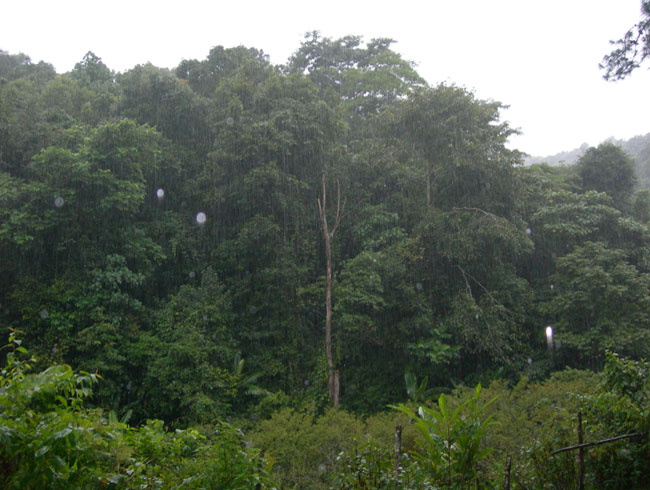
heads! I took a rainy photograph just to remind visitors that
it is not always sunny in Thailand.
25th July : With Giant Nuthatch as our primary
target we were at Km 31 early and in the fog! However, with
just a few trees that are used by the nuthatch it was relatively
easy to find one - an excellent result. This area was quite
birdy so we stayed and found Stripe-breasted Woodpecker, Eurasian
Jay and a number of other species.
It's always nice to get a target species and as we were satisfied
we moved along to Km 25. Once again we found nice birds here,
notably Grey Treepie (which is quite reliable here in the
mornings), Golden-throated Barbet and Yellow-eyed Babbler.
With our stomachs complaining we went back to Ban Khoom for
some food and gave the Mae Per trail another go. Although
it was raining on and off our efforts were rewarded by a White-crowned
Forktail on the trail, some Hill Prinias in the undergrowth
and some excellent views of Silver-eared Mesia; a bird I never
tire of.
With the time already 1pm we decided we wanted to try our
luck at Wat Tam Plapong near Doi
Chiang Dao. The journey took just over 1.5 hours but it
quickly seemed that we had stretched our fortune too far with
very little activity here. We were hoping for Streaked Wren
Babbler but with so many monks sweeping the stairs it was
a fruitless search, better to try the morning for this species.
We did add a few birds to our trip list here, but Puff-throated
Bulbul and Grey-throated Babbler didn't seem like the right
way to end this excellent trip so we walked down the road
a little and the bird I was hoping for showed up - a Black-hooded
Oriole. It was a juvenile but it gave us a good view and stuck
around for a while. This seemed like a suitable bird to finish
with so we walked back to the car.
The drive back to Chiang Mai took a little over hour, the
traffic being light due to it being the non-tourist season.
Tung Bang Jak: TBJ
Laem Pak Bia: LPB
King's Project: KP
Kaeng Krachan: KK
Doi Inthanon: DI
Huay Tueng Tao: HTT
Doi Ang Kang: DAK
Wat Tamplapong, Chiang Dao: CD
1. Mountain Bamboo Partridge: 1
on Mae Per Trail DAK.
2. Red Junglefowl: A few small groups
at KK. 3. Lesser Whistling Duck: Small
flocks TBJ & HTT.
4. Little Grebe: A few at KP.
5. Grey-capped Pygmy Woodpecker: 1
DAK. 6. Stripe-breasted Woodpecker: 3,
DAK. 7. Speckled Piculet: 1,
DI. 8. White-browed Piculet: Several
at KK, 2 at DI, 1 DAK. 9. Buff-rumped Woodpecker: 1,
KK. 10. Heart-spotted Woodpecker: 1f,
KK. 11. Streak-breasted Woodpecker: 1,
KK. 12. Grey-headed Woodpecker: 1,
KK. 13. Common Flameback: 1,
DI. 14. Greater Flameback: 3,
KK. 15. Great Slaty Woodpecker: 2,
KK . 16. Green-eared Barbet: A
few at KK. 17. Golden-throated Barbet: 1
DAK. 18. Blue-throated Barbet: 1
DI, a few DAK. 19. Blue-eared Barbet: A
few seen, KK. 20. Coppersmith Barbet: 3,
KK. 21. Oriental Pied Hornbill: Several
seen, KK. 22. Great Hornbill: Fairly
abundant, KK. 23. Tickell's Brown Hornbill: A
large flock, KK. 24. Orange-breasted Trogon: 3,
KK. 25. Red-headed Trogon: 1f,
DI 37.5km jeep track. 26. Banded Kingfisher: 1m
seen, KK. 27. White-throated Kingfisher: Several,
TBJ, LPB, KK, HTT. 28. Collared Kingfisher: Several,
LPB. 29. Black-backed Kingfisher: 1
adult bringing a lizard to a nest hole. 30. Blue-bearded Bee-eater: A
couple, KK. 31. Green Bee-eater: Abundant,
TBJ, HTT. 32. Blue-tailed Bee-eater: Abundant,
TBJ. 33. Greater Coucal: TBJ,
LPB, KK. 34. Lesser Coucal: 1
DAK. 35. Plaintive Cuckoo: 1,
HTT. 36. Asian Koel: A few,
TBJ. 37. Green-billed Malkoha: 1
DI, 1 DAK. 38. Indian Roller: Several,
TBJ, KK, 1 at HTT. 39. Dollarbird: A few,
KK. 40. Hoopoe: 1 LPB,
1 DAK. 41. Himalyan Swiftlet: Abundant
DI & DAK. 42. Germain's Swiftlet: A
few, LPB. 43. Asian Palm Swift: Everywhere. 44. Fork-tailed Swift: DI
& DAK. 45. Brown-backed Needletail: Several,
KK. 46. Asian Barred Owlet: 1
seen, HTT. 47. Spotted Owlet: 1
at Inthanon Highland Resort, DI. 48. Rock Pigeon: TBJ,
LPB. 49. Spotted Dove: TBJ,
LPB, KK, HTT, DAK. 50. Red-collared Dove: TBJ,
LPB. 51. Peaceful Dove:
TBJ, LPB. 52. Thick-billed Green Pigeon: About
40, KK. 53. Emerald Dove: 2,
KK. 54. White-breasted Waterhen: Several,
TBj, LPB & 2 at KK. 55. Watercock: 1m,
TBJ 56. Pheasant-tailed Jacana: 2
TBJ. 57. Bronze-winged Jacana: Several,
TBJ. 58. Marsh Sandpiper: 1
LPB. 59. Common Greenshank: A
few, LPB. 60. Spotted Redshank:
12, LPB. 61. Wood Sandpiper: A
few, TBJ. 62. Red-necked Stint: A
few, LPB. 63. Long-toed Stint:
A few, LPB. 64. Black-winged Stilt: Many,
TBJ, LPB, KP. 65. Little Ringed Plover:
A few, LPB. 66. Oriental Pratincole: 20-30,
TBJ. 67. Kentish Plover:
A few, LPB. 68. Malaysian Plover:
3, LPB. 69. Lesser Sand Plover: 30-40,
LPB. 70. Greater Sand Plover: 10-20,
LPB. 71. Red-Wattled Lapwing: Abundant,
TBJ, HTT. 72. Little Tern: Several,
LPB. 73. Brahminy Kite: A
few, LPB. 74. Osprey: 1, LPB. 75. Shikra: 1m, DAK. 76. Crested Goshawk: 1,
CD. 77. Crested Serpent Eagle: Several,
KK. 78. Rufous-bellied Eagle: 1,
KK. 79. Black-shouldered Kite: 2,
TBJ. 80. Collared Falconet:
Abundant on Km 13 trail, DI. 81. Black-thighed Falconet: Several,
KK. 82. Little Cormorant: A
few at TBJ, many at LPB, KP. 83. Indian Cormorant: Many,
LPB, KP. 84. Little Egret: Many,
TBJ, LPB, KP, 1 at KK. 85. Great Egret: Many
TBJ, LPB, KP. 86. Cattle Egret: Many,
TBJ, LPB, KK. 87. Grey Heron: 1,
KP. 88. Javan Pond Heron: Abundant,
TBJ, LPB. 89. Black-crowned Night Heron: Many,
KP. 90. Little Heron: Several,
LPB, KP. 91. Yellow Bittern: Many,
TBJ. 92. Cinnamon Bittern: Many,
TBJ, 1 HTT. 93. Black Bittern: 2,
TBJ. 94. Painted Stork: 2,
TBJ, many at LPB, 7 at KP. 95. Asian Openbill: Very
abundant TBJ. 96. Spot-billed Pelican:
1, KP. 97. Blue Pitta: 1 seen
well at KK. 98. Blue-winged Pitta: 1
seen on the lawn at Ban Maka, KK. 99. Black-and-red Broadbill:
A pair, KK. 100. Silver-breasted Broadbill: A
pair, KK. 101. Banded Broadbill: A
very noisy pair, KK. 102. Blue-winged Leafbird:
Several, KK. 103. Golden-fronted Leafbird: A
few, Km 13 DI. 104. Asian Fairy Bluebird: A
few, KK. 105. Long -tailed Shrike: Several,
TBJ, KP, DAK. 106. Black Drongo:
20-30, TBJ, LPB & 2 at HTT. 107. Ashy Drongo: 2
mouhoti, DI, DAK. 108. Bronzed Drongo: Common,
KK, DI, DAK. 109. Lesser Racket-tailed Drongo: 1
DI, 1 DAK. 110. Spangled (Hair-crested) Drongo: 2
or 3, KK. 111. Greater Racket-tailed Drongo: 5
or 6, KK. 112. Eastern Jungle Crow: Several
at TBJ, 5-6 at DI. 113. Eurasian Jay:
2, DAK. 114. Red-billed Blue Magpie:
A few nar park gate, DI. 115. Common Green Magpie: 2,
KK, 1 at DI. 116. Rufous Treepie:
A few DI, many at HTT. 117. Grey Treepie: 3
at Km 25 DAK. 118. Racket-tailed Treepie: 2,
TBJ. 119. Black-hooded Oriole: 1j,
CD. 120. Grey-chinned Minivet: A
few, DI, DAK. 121. Short-billed Minivet: Several,
DI & DAK. 122. Scarlet Minivet: A
few, KK. 123. Bar-winged Flycatcher-shrike: 4,
DI. 124. Yellow-bellied Fantail: A
few, DI. 125. White-throated Fantail: Many,
DI & DAK. 126. Pied Fantail: Several,
TBJ, LPB, KP. 127. Common Iora: A
few, KP and HTT. 128. Great Iora: 1,
KK. 129. Black-naped Monarch: A
few, KK, DI. 130. Asian Paradise Flycatcher: 2
indochinensis, DI.
131. Blue Whistlingthrush:
1 eugenei, DI.
132. Scaly Thrush: 1 at Km
31 DAK. 133. Asian Brown Flycatcher: 1
siamensis at HTT. 134. Snowy-browed Flycatcher: 1
jf, DI. 135. Hainan Blue Flycatcher: 1,
KK. 136. Verditer Flycatcher: A
couple, DAK. 137. Large Niltava: A
few, Km 37.5, DI. 138. Small Niltava: 1,
DI. 139. Grey-headed Canary Flycatcher: Many,
KK, DI, DAK, CD. 140. Oriental Magpie Robin: A
few, TBJ, LPB, KP, DAK. 141. White-rumped Shama: A
few, KK. 142. Lesser Shortwing: 1,
DI summit. 143. White-browed Shortwing: Abundant,
DI summit. 144. Slaty-backed Forktail: 2,
Vatcharitan Waterfall, DI. 145. White-crowned Forktail: 1
Mae Per trail, DAK. 146. Eastern Stonechat: A
few, DAK. 147. Pied Bushchat: A
few, HTT. 148. Grey Bushchat: 1
at DI, several at DAK. 149. Ashy Woodswallow: Everywhere. 150. Asian Pied Starling: Many,
TBJ, LPB, KP. 151. Black-Collared Starling: A
few near KK, many at HTT. 152. Chestnut-tailed Starling: 3,
HTT. 153. Common Myna: Many,
TBJ, LPB, KP, HTT. 154. White-vented Myna: Many,
TBJ, LPB, KP, HTT. 155. Chestnut-vented Nuthatch: DI,
DAK. 156. Giant Nuthatch: 1,
DAK. 157. Hume's Treecreeper: 1,
Km 37.5 trail, DI. 158. Sultan Tit: Several,
KK. 159. Yellow-cheeked Tit: Several,
DI & DAK. 160. Barn Swallow: Everywhere
in small numbers. 161. Wire-tailed Swallow: 1
at HTT. 162. Striated Swallow: A
few, DI & DAK. 163. Crested Finchbill: Abundant,
DAK. 164. Striated Bulbul: A
few, DAK. 165. Black-headed Bulbul: A
few , KK. 166. Black-crested Bulbul: A
few, DI & DAK. 167. Red-whiskered Bulbul: Many,
HTT & DAK. 168. Brown-breasted Bulbul: Abundant
DAK. 169. Sooty-headed Bulbul: A
few near KK, abundant at HTT & DAK. 170. Stripe-throated Bulbul: A
few, KK. 171. Flavescent Bulbul:
Abundant DAK. 172. Streak-eared Bulbul: TBJ,
LPB. 173. Grey-eyed Bulbul: 2,
KK. 174. Puff-throated Bulbul: 2,
CD. 175. Ochraceous
Bulbul: Many, KK. 176. Ashy Bulbul: A
large flock at DAK. 177. Mountain Bulbul: Common
DI & DAK. 178. Black Bulbul: Common
DAK. 179. White-headed Bulbul: A
flock of about 12 at DAK. 180. Golden-bellied Gerygone: A
few, KP. 181. Zitting Cisticola: Several
at HTT. 182. Bright-headed Cisticola: 2m,
HTT. 183. Hill Prinia: 3,
DAK. 184. Grey-breasted Prinia: Several,
HTT. 185. Yellow-bellied Prinia: 1,
TBJ. 186. Plain Prinia: Numerous,
TBJ, LPB, HTT. 187. Mountain Tailorbird: A
few, DI. 188. Common Tailorbird: Abundant,
KK. 189. Ashy-throated Warbler: Several,
summit DI.
190. Blyth's Leaf Warbler: A
few, DI.
191. Davison's Leaf Warbler: Abundant,
DI & DAK.
192. Oriental White-eye: Numerous,
DI & DAK. 193. Chestnut-crowned Warbler:
A few, DI. 194. Yellow-bellied Warbler: 3,
DI. 195. Greater Necklaced Laughingthrush: A
few, KK. 196. Lesser Necklaced Laughingthrush: Several
groups, KK. 197. White-browed Laughingthrush:
Several groups, DAK. 198. Silver-eared Laughingthrush: A
few at summit DI & 1 DAK. 199. Spot-throated Babbler: 2,
DAK. 200. Puff-throated Babbler: A
few, KK. 201. White-browed Scimitar Babbler: Several
groups, DAK. 202. Pin-striped Tit Babbler: Many,
KK. 203. Chestnut-capped Babbler: A
small group, HTT. 204. Yellow-eyed Babbler: 3,
DAK. 205. Rufous-fronted Babbler:
A few, KK. 206. Golden Babbler: Several,
DI & DAK. 207. Grey-throated Babbler: 2,
CD. 208. Spot-necked Babbler: 2
pairs, KK. 209. Silver-eared Mesia: Several
groups, DI & DAK. 210. White-browed Shrike-babbler:
1f at DI, 1m at DAK. 211. Chestnut-fronted Shrike-babbler:
1f, DI. 212. Chestnut-tailed Minla:
Common, summit DI. 213. Rufous-winged Fulvetta:
Common, summit & Km 37.5 jeep track, DI. 214. Brown-cheeked Fulvetta:
A few small groups, KK. 215. Grey-cheeked Fulvetta: Common
DI & DAK. 216. Whiskered Yuhina: A
party of about 12 at DAK Km 25. 217. White-bellied Erpornis:
A few, KK & DI. 218. Rufous-backed Sibia: A
few, DI & DAK. 219. Dark-backed Sibia:
Common DI & DAK. 220. Spot-breasted Parrotbill:
A group of 4, Mae Per trail, DAK. 221. Black-throated Parrotbill:
A small group, jeep trail Km 34.5, DI. 222. Plain Flowerpecker:
Common, DAK. 223. Scarlet-backed Flowerpecker:
KK & HTT. 224. Ruby-cheeked Sunbird:
A few pairs, KK. 225. Olive-backed Sunbird: A
few, KK & HTT. 226. Green-tailed Sunbird: A
few, summit DI. 227. Black-throated Sunbird:
3 or 4, DI & DAK. 228. Little Spiderhunter: 1,
DI. 229. Streaked Spiderhunter: Fairly
common, DI & DAK. 230. Paddyfield Pipit: 1
at LPB, a few at HTT. 231. Indochinese Bushlark: 2
at TBJ, 3 or 4 at HTT. 232. Grey Wagtail: 2,
KK & 3 DI. 233. Plain-backed Sparrow: Several,
TBJ, KP. 234. Eurasian Tree Sparrow:
Ubiquitous. 235. Streaked Weaver:
Small numbers, TBJ. 236. Baya Weaver:
Abundant, TBJ. 237. Asian Golden Weaver:
Small numbers, TBJ. 238. Scaly-breasted Munia:
Common, TBJ & a few at DAK. 239. White-rumped Munia:
A few, DI & common at DAK. 240. Chestnut Munia:
2, TBJ.
Species heard only: I am not
into padding out trip lists with species heard only, but I
include a list of those species heard but not seen for the
information of others looking for these birds.
1.Chinese Francolin: 1
at HTT.
2. Rufous-throated Partridge: Lots
calling on Km 37.5 jeep track, DI on 20th, but not after that. 3. Scaly-breasted Partridge: Many
at KK. 4. Greater Yellownape: Common
at KK, but eluded being seen. 5. Rufous Woodpecker: HTT. 6. Great Barbet: DI & DAK. 7. Lineated Barbet: HTT. 8. Large Hawk Cuckoo: Briefly
heard at DAK. 9. Vernal Hanging Parrot: Common
at KK, but only seen speeding through the canopy. 10. Collared Scops Owl: At Ban
Maka, KK & Nature Resort, DAK. 11. Collared Owlet: KK. 12. Eared Pitta: Heard frustratingly
close at KK. 13. Green Cochoa: Km 37.5 jeep
track DI, seen only as it flew across the canopy.
14. Hill Blue Flycatcher: DI. 15. Tickell's Blue Flycatcher: HTT. 16. White-tailed Robin: Common
DI & DAK but elusive. 17. Slaty-bellied Tesia: Common
DI but difficult to see because of rain. 18. Russet Bush Warbler: A few,
DAK. 19. White-crested Laughingthrush: DI
& HTT. 20. White-necked Laughingthrush: Km
37.5 jeep track, DI. 21. Red-tailed Laughingthrush: DAK. 22. Red-faced Liocichla: DAK. 23. Abbott's Babbler: Common,
KK. 24. Rusty-cheeked Scimitar Babbler: DI
& DAK. 25. Pygmy Wren Babbler: DI &
DAK.
If you are interested in arranging a bird
watching tour you can see some suggested itineraries here
- Birdwatching Trips
- and you can contact me at the above email address to discuss
the best options.






 Download
a full
Download
a full