Bang Poo, in Samut Prakarn province,
is owned and managed by the Thai military and at first seems
a strange place to go bird watching; it is scrappy area of
offices, ponds, mudflats, mangroves and wasteland where locals
go for a picnic, to do tai chi, to release crabs for merit
making, to feed the gulls and to dine at the restaurant. However,
by poking around the whole site quite an amazing number of
birds can be seen, particularly during migration, and I have
personally seen over one hundred and fifty species here.
It is for shorebirds that most people will visit and this
means that the months between October and April are the best
for bird watching and the site's close proximity to Bangkok
makes it an ideal locations for a half day trip by taxi; or
make a whole day of it by going to Muang
Boran Fish Ponds in the morning and then move on to
Bang Poo for lunch and afternoon birding.
Bang Poo can get exceptionally crowded at weekends so it is
a good idea to schedule your visit for a weekday if you appreciate
peace and quiet whilst birding or if you are there at the
weekend, just join the locals in the gull-feeding!
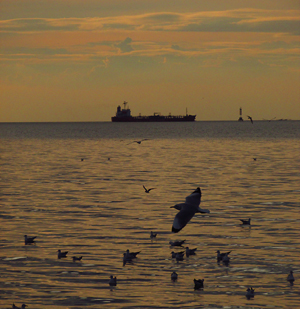
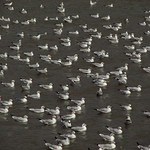
From mid October to the end of April, two to three thousand
Brown-headed Gulls are normally to be seen at Bang Poo with
small numbers of Black-headed Gulls nearly always present
within the flock. This large gull flock is easily observed,
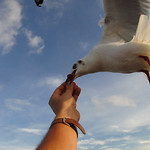
with many locals feeding the birds scraps of food, and it
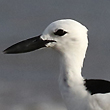
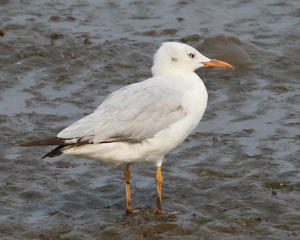
is worth checking for less common species; Slender-billed
Gull is usually annual here as are Heuglin's Gull; most of
the gull rarities from Thailand have been recorded here including
Little Gull, Mew Gull and Sooty Gull while other rarities
are likely in the future.
Terns are also a feature here, Whiskered is the most numerous
and most of the other Thai species often turn up here.
Bang Poo is also a good place to see waders on the mudflats
at low tide and on the inland pools at high tide. Inspecting
the wader flocks can reveal some interesting birds with Grey-tailed
Tattler sometimes found here in April and May and Asian Dowitcher
sometimes amongst the large flock of Eastern Black-tailed
Godwits.
Bang Poo doesn't at first appear as if it would be an ideal
birding venue, but it is one of those sites that often turns
up rare migrants, particularly for those who watch the site
on a regular basis during the months of September/October
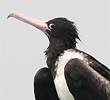
and March/Aprill; Baillon's Crake, Glossy Ibis, Christmas
Island Frigatebird, Black-faced Spoonbill and Crested Myna
have all been found here.
Apart from these highlights, any walk around Bang Poo will
afford good views of many commoner species such as Collared
Kingfisher, Brahminy Kite, Egrets, Plain-backed Sparrow, Common
Iora and Golden-bellied Gerygone, and a seafood lunch in the
restaurant at the end of the pier is a non-birding highlight
of any visit to Bang Poo!
Use the interactive map below to plan your route to
Bang Poo. The blue line shows the route from Sukhumvit Road
(A) in downtown Bangkok via Muang Boran (B) to Bang Poo (C).
The first time I tried to visit Bang Poo I got completely
lost and ended up at Samut Prakarn docks, not one of the world's
ornithological hotspots. The mistake I made was trying to
get there by bus, which involves changing at Samut Prakarn
and a walk between buses: I would not recommend this method
at all as the distance between buses is considerable and finding
the correct connection is difficult.
The best method is to take a taxi and tell the driver SaTarn
Tee Tark A-Kart Bang Poo or if that is a bit too tricky to
get your tongue around show the taxi driver the Bang
Poo Thai Script. Most taxi drivers seem to know it,
but you may have to help them as you get nearer to the site.
On the meter the cost should be about 3-400 baht from Bangkok
city centre and taxis for the return journey are easily obtained
by walking the short distance back to the main road and waiting
for one to come along.
The alternative method is to drive yourself if you have already
hired a vehicle for your holiday; follow Sukhumvit road from
central Bangkok all the way to the Bang Na intersection and
turn left into Bang Na - Trad Road. Shortly after passing
Central department store turn left onto Sri Nakarin Road towards
Samut Prakarn; to do this you must turn left after passing
under the road NOT before. After turning onto Sri Nakarin
Road continue until it finishes in a T-junction and turn left.
Continue along here until seeing a sign for Muang Boran; a
few kilometres after this you will see sign posts for Bang
Poo which is on your right - you must do a little u-turn to
make the turning. This route is very busy and frequently subject
to traffic jams; my recommendation is to leave before sunrise
for an easy drive or, if timing your visit for the tide, leave
central Bangkok at least 1.5 hours before your desired arrival
time.
Bird
Watching Trips:
If you need help organizing a bird watching trip to Thailand,
take a look at the suggested itineraries for ideas on
creating a tailor-made trip and contact me for advice:
Thailand
bird tours.
Finding Birds
A large number of species can be found at Bang Poo at the
right time of year, and due to the small size of the site
most of these can be easily found. There is always potential
to add to the site list, with unusual migrant species showing
up every year with some surprising species having been seen
over the years.
Most bird watchers come here to see shorebirds and indeed
many species in this group are easily observed on the mudflats
at low tide (view from the pier) and on the inland pools at
high tide.
However, it is also worth taking a walk around the site where
a lot of common open-country species can be found as well
as a number of interesting migrant species. The Spring migration
tends to produce the richest pickings in terms of unusual
migrants here, with Grey-tailed Tattler often seen in small
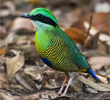
numbers in April and early May as well as Blue-winged Pitta
and a whole lot of other passerines passing through.
There are a number of spots around Bang Poo where bird watchers
are likely to make the most interesting observations;
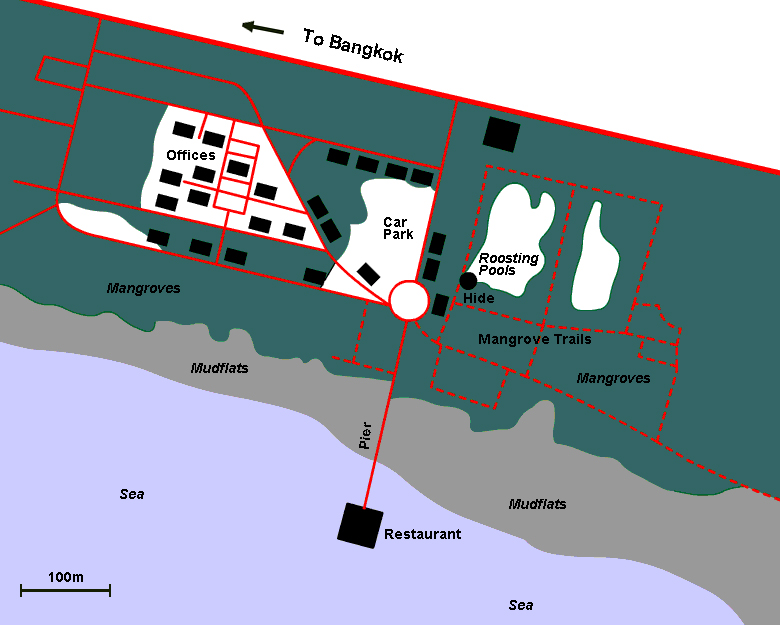
Mudflats:
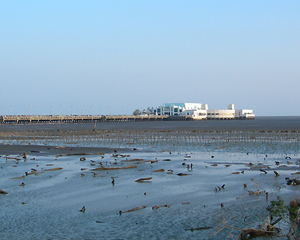
The pier provides the best place to observe birds on
these mudflats and as with any shorebird watching getting
the tide at the right time is important or the birds can be
distant specks (tides can be found here: My
Forecast, Marine Reports); it is important to have a telescope
here although if you are present when the tide is just going
out or coming in birds do come quite close. Large numbers
of Black-tailed Godwit are usually found here and other commoner
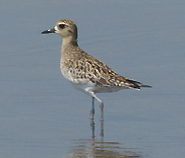
shorebirds here include Pacific Golden Plover, Common Redshank,
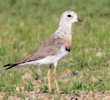
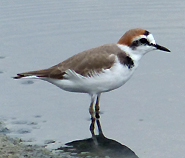
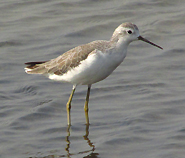
Kentish Plover, Marsh Sandpiper and Common Greenshank with
species such as Tibetan Sand Plover, Greater Sand Plover and
Red-necked Stint usually present too.
Terns can be observed closely from the pier too as they either
roost on mudflats and/or bamboo poles or fish over the shallow
waters. In April it is a great place to get really close views
of Whiskered and White-winged Terns in breeding plumage as
they cruise alongside the pier.
Lines of bamboo poles encourage sedimentation and prevent
erosion and these are appreciated by roosting gulls, terns
and Collared Kingfishers as well as Black-capped Kingfisher
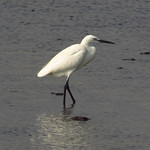
during the dry season. Great and Little Egrets are common
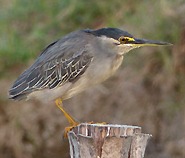
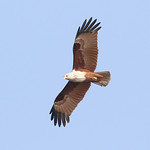
on the mudflats as are Little Herons and a Brahminy Kite or
two can usually be seen and Painted Storks are seen more and
more frequently too.
The pier is also the best place to observe the gulls that
make Bang Poo famous among Thai people. Between October and
April large numbers of Brown-headed Gulls can be seen at close
quarters and there are always a few Black-headed Gulls too
which can be tricky to pick out. In most years a few Slender-billed
Gulls join the flock too and over the course of the years
all sorts of gull rarities have shown up; check the gull flock
carefully.
Although the Gulf of Thailand has few seabirds other than
gulls and terns, in recent years boat trips into the Gulf
in April/May have discovered some species of interest and
with the right winds the pier at Bang Poo may be a good spot
to look for such birds - I have seen Great Cormorant out to
sea here and Bridled Tern at this migratory time of year and
Frigatebirds occur ocassionally.
Roosting
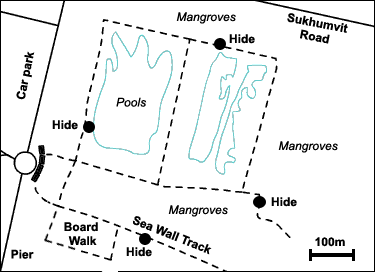
Pools: In an area where the land adjacent to
the sea is dominated by industry, this small area of coastal
pools is important as a high-tide roost for many of the area's
wading birds. This area has been designated as a nature reserve
and has a number of hides for viewing the birds on the pools;
it is fenced and sometimes the main gate it locked but don't
worry because there is another rickety wooden gate at the
rear of the adjacent building that is always open.
A large flock of Black-tailed Godwits always gather here
at high tide and sometimes it is possible to find one or two
Asian Dowitchers within their midst - their thick, black bill
stands out in the crowd. Species such as Wood Sandpiper and
Long-toed Stint favour this habitat at all times, rarely venturing
out onto the mudflats. Other shorebird species that can be
seen at close range here, while roosting, include Curlew Sandpiper,
Red-necked Stint, Marsh Sandpiper, Pacific Golden Plover,
Common Sandpiper and breeding Black-winged Stilt.
The trails and the new mangrove boardwalk in this area allow
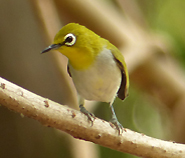
birders to look for small passerines such as Oriental White-eye,
Dusky Warbler, Ashy Minivet and Golden-bellied Gerygone; a
number of other species may be found during migratory times
including some great birds such as Yellow-rumped Flycatcher
and Blue-winged Pitta.
A track also goes along the sea wall here and it is a good
place to sit quietly as the tide comes in and watch the shorebirds
as they gradually get closer; there is a hide here to help
birders with this.
Mangrove
Trails: A combination of paved tracks, dirt
tracks and boardwalks (some of which are in a poor state of
repair) give birders access to the largest area of remaining
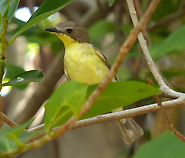
mangroves. Golden-bellied Gerygone is very numerous here and
its high-pitched whistle can often be heard coming from any
of the many mangrove fragments. It can be quite a difficult
species to observe due to its tiny size and colouration, but
be patient and you are sure to eventually obtain good views
perhaps alongside Swinhoe's White-eye. In the early morning
and late afternoon Pink-necked Green Pigeons perch on exposed
branches in this area while Blue-tailed Bee-eaters use the
same perches for hunting from. Walking these trails in migratory
periods is likely to turn up species such as Square-tailed
Drongo Cuckoo, Yellow-rumped Flycatcher, Eastern Crowned Warbler,
Mugimaki Flycatcher and many others while Ashy Drongo, Asian
Brown Flycatcher and Dusky Warbler are common "winter"
visitors.
Offices:
In this area there is a lot of scruffy vegetation surrounding
buildings used as some sort of offices. Plain-backed Sparrows
can be found; listen out for their call which has a subtle
difference from that of the ubiquitous Eurasian Tree Sparrow
and is more attractive than its name suggests. Although this
is a scruffy little patch of habitat a few other passerines
of interest can usually be found here too including Chestnut
Munia, Golden-bellied Gerygone and Common Iora.
Facilities
It is possible to find a small hotel locally, there are
certainly a few hotels
in the town of Samut Prakarn, but unless you find yourself
caught out late or intend to drive further afield the next
day then it would be a better idea to make this a day trip
from your hotel in Bangkok: Bangkok
Hotel Reservations. If you are looking for a
hotel at Suvarnabhumi airport, which is not far away, I would
recommend Grand
BS Airport Hotel if you plan to stay near the
airport.
In terms of refreshments there are plenty available to revive
you if the heat becomes too much; a number of small kiosks
around the gate to the pier have cold drinks and snacks for
sale, sometimes food such as barbequed chicken is available
here too. There is also a small restaurant which sells a variety
of cheap Thai food with menus that carry some sort of English
language translation. The real treat though is the restaurant
at the end of the pier which specializes in seafood. Lunch
or dinner here after watching the birds is a good way to relax
and the menu is in English and Thai making it easy to order
- the friendly staff will do all they can to help you order
something good. There is also a small restaurant near the
gate to the pier which serves simple, cheap and tasty dishes.
There are toilets both before the pier and at the end of the
pier and there are a couple of cash machines in the building
at the end of the pier. This is a military premesis so if
you should have any minor first aid requirements, speak to
one of the military personel who will contact one of their
first-aiders.
For those who are interested, there are a number of vendors
on the pier that sell food to feed to the gulls; it can help
to draw them near and spot a rarity!
This location is not a National Park and you will not be
charged to go birding here.
Shorebirds:
An Identification Guide to the Waders of the World This is still the most complete guide to shorebirds
with a wide variety of plumages of all species illustrated
both standing and in flight. Packed full of information
this is the book if you want to learn more about this
group of birds..
Birds
of Thailand This field guide has set new standards in identifying
birds in the wild in Thailand. With the most up-to-date
taxonomy of any publication this is the book you need
if you are birdwatching in Thailand. Forget all of the
older guides and buy this one.
Bird
Watching Trips:
Bang Poo is a good site for a half-day of birding and
makes a nice final stop on any birding itinerary finishing
in Bangkok; great for close-up photos of gulls and there
is always the chance of a rarity here.
I Hope
You Enjoyed This Page
If you found the information you were looking for here
please let others know by liking this page on Facebook
and Tweeting it.








 Shorebirds:
An Identification Guide to the Waders of the World
Shorebirds:
An Identification Guide to the Waders of the World




 Download
a full
Download
a full